
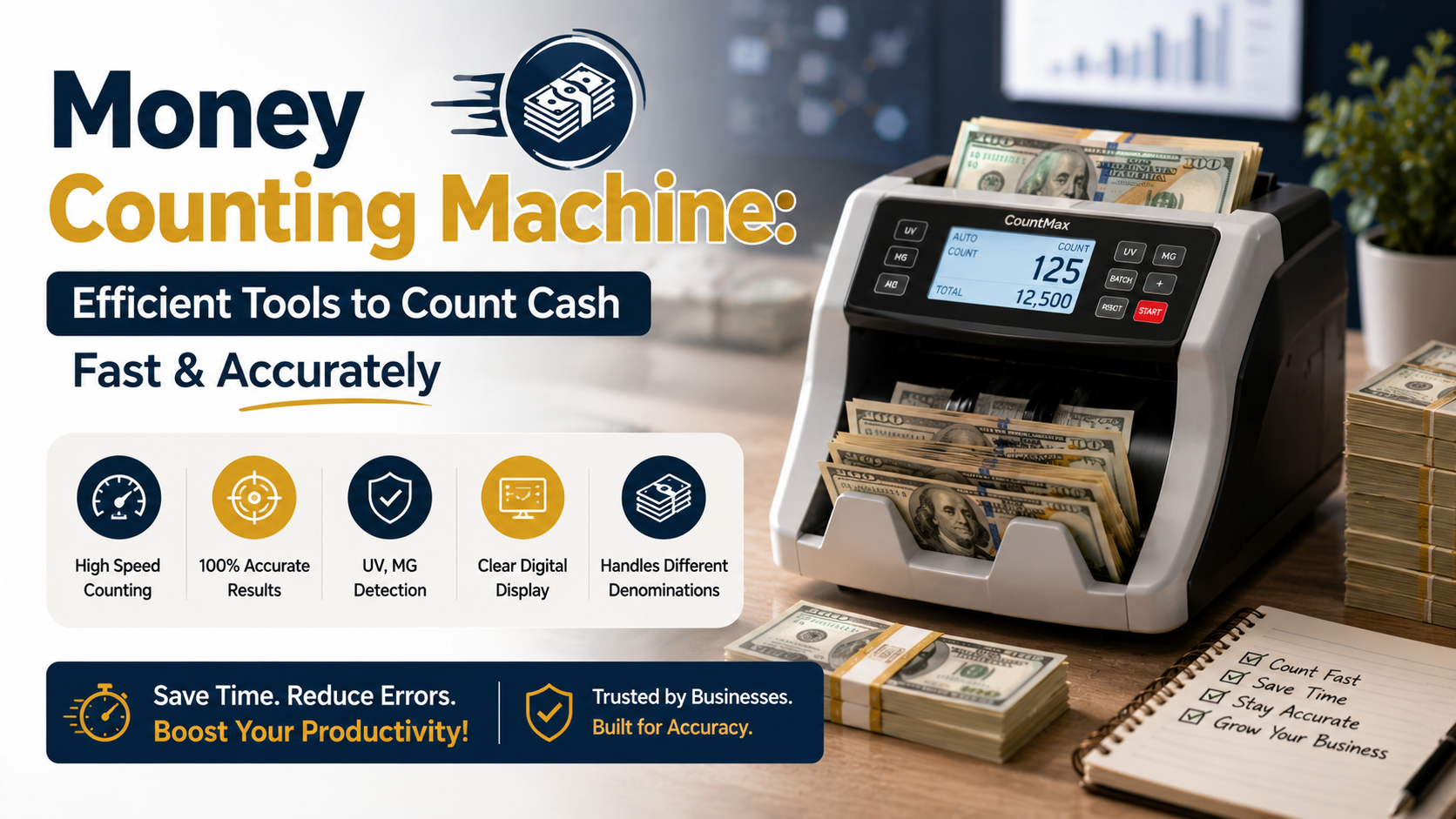
Handling cash efficiently is crucial for businesses of all sizes, from small retail stores to large financial institutions. Manual counting can be time-consuming, error-prone, and stressful, especially when dealing with large volumes of currency. Fortunately, a money counting machine is a reliable solution that automates the process, saving time and increasing accuracy. This article explores the benefits, types, usage tips, and considerations when investing in a money counting machine, offering practical guidance for businesses and individuals alike.
Understanding Money Counting Machines
A money counting machine is a device designed to count paper currency efficiently and accurately. It can process hundreds of bills per minute, reducing the risk of human error while saving valuable time. These machines are widely used in banks, retail stores, casinos, and any cash-heavy business environment. Modern machines not only count bills but also detect counterfeit currency, sort denominations, and sometimes even batch notes for easier handling.
Understanding the technology behind money counting machines is essential before making a purchase. Most machines use optical sensors, magnetic sensors, or ultraviolet detection to identify denominations and detect counterfeit bills. The combination of speed, accuracy, and security makes these devices indispensable for businesses that handle cash daily.
The Importance of Using a Money Counting Machine
Counting cash manually can be tedious and prone to mistakes. Errors in cash counting can lead to financial discrepancies, accounting problems, and even mistrust among employees or customers. By using a money counting machine, businesses can ensure accuracy, improve efficiency, and free up staff to focus on other essential tasks.
Moreover, money counting machines help streamline cash management, providing detailed reports on total amounts counted, denomination breakdowns, and error alerts. This improves transparency and helps maintain accurate financial records. Whether you operate a small shop or a large bank, investing in a reliable money counting machine is a practical way to safeguard your cash flow.
Types of Money Counting Machines
Not all money counting machines are the same. Understanding the different types helps you choose one that best suits your needs:
- Basic Counting Machines – Simple machines designed only to count bills quickly without additional features. They are affordable and ideal for low-volume cash environments.
- Mixed Denomination Counters – These machines automatically detect and sum up different bill denominations, eliminating the need to sort currency manually.
- Currency-Detecting Machines – Equipped with counterfeit detection features such as ultraviolet (UV), magnetic (MG), and infrared (IR) sensors.
- High-Speed Banknote Counters – Designed for high-volume environments, these machines count thousands of bills per hour efficiently.
- Compact Desktop Counters – Small, portable devices suitable for small businesses, convenience stores, or personal use.
Choosing the right type depends on cash volume, business size, and security requirements. A well-matched money counting machine ensures maximum efficiency and reliability.
Benefits of Using a Money Counting Machine
Investing in a money counting machine offers numerous advantages:
- Accuracy – Eliminates human errors in cash counting, ensuring reliable results every time.
- Speed – Counts hundreds of bills per minute, significantly reducing time spent on manual counting.
- Security – Many machines detect counterfeit bills, helping prevent financial loss.
- Efficiency – Frees employees from tedious counting tasks, allowing them to focus on more productive work.
- Record-Keeping – Advanced models provide detailed reports for accounting and auditing purposes.
Overall, a money counting machine improves financial management, reduces stress, and increases productivity, making it an essential tool for any cash-handling environment.
How to Use a Money Counting Machine Effectively
Using a money counting machine properly ensures accuracy and prolongs the machine’s lifespan. Here are some best practices:
- Sort Bills Before Counting – Remove torn, wet, or heavily folded bills to prevent jams and ensure accurate counting.
- Clean the Machine Regularly – Dust and debris can affect sensors, so regular cleaning is essential.
- Calibrate the Machine – Ensure the device is calibrated correctly, especially when switching currencies.
- Follow Manufacturer Guidelines – Read the user manual carefully to understand the functions and safety measures.
- Batch Large Quantities – Divide large stacks into manageable batches to reduce errors and machine strain.
Following these steps helps maximize the performance of your money counting machine and minimizes maintenance issues.
Counterfeit Detection and Security Features
Modern money counting machines come with advanced counterfeit detection features that protect businesses from fraudulent currency. Common detection technologies include:
- Ultraviolet (UV) Detection – Checks for UV markings on bills that counterfeit notes often lack.
- Magnetic (MG) Detection – Detects the magnetic ink used in genuine currency.
- Infrared (IR) Detection – Measures the reflective properties of genuine bills.
- Size Detection – Identifies inconsistencies in bill dimensions that may indicate counterfeit notes.
These features are crucial for businesses that handle high cash volumes, ensuring that every transaction is secure. Using a money counting machine with counterfeit detection provides peace of mind and reduces the risk of financial loss.
Factors to Consider When Buying a Money Counting Machine
Selecting the right money counting machine requires careful consideration of several factors:
- Cash Volume – High-volume businesses need high-speed counters, while small businesses may only need basic models.
- Currency Type – Some machines support multiple currencies, which is essential for businesses dealing with international transactions.
- Counterfeit Detection – Decide which security features are necessary for your business.
- Budget – Prices vary widely based on features and capacity. Balance cost with functionality.
- Maintenance and Support – Choose a brand with reliable customer service and easily replaceable parts.
By evaluating these factors, businesses can invest in a machine that meets their operational needs without overspending.
Maintenance Tips for Longevity
To ensure your money counting machine lasts for years, proper maintenance is essential:
- Regular Cleaning – Use compressed air or a soft brush to remove dust from sensors.
- Avoid Overloading – Never insert more bills than recommended.
- Store Properly – Keep the machine in a dry, dust-free environment.
- Software Updates – For digital models, update software to maintain accuracy and security features.
- Professional Servicing – Schedule periodic maintenance checks to prevent major malfunctions.
Proper care enhances the machine’s efficiency and reduces the risk of breakdowns, making it a reliable long-term investment.
Choosing Between Manual Counting and a Machine
While manual counting may still be viable for very small cash volumes, a money counting machine offers unmatched efficiency, speed, and accuracy. Businesses dealing with regular cash transactions will benefit from reduced labor costs, faster service, and enhanced security. In contrast, manual counting increases the risk of errors, theft, and employee fatigue.
Ultimately, a money counting machine is an essential tool for modern cash management. It not only simplifies the counting process but also strengthens financial control and accountability, supporting better business operations.
Conclusion: Making Cash Management Efficient
A money counting machine is no longer a luxury; it is a necessity for businesses handling cash regularly. From improved accuracy and speed to counterfeit detection and reporting, these machines offer unparalleled benefits that manual counting cannot match.
Investing in a reliable money counting machine streamlines operations, reduces errors, and ensures that cash management is fast, accurate, and secure. By understanding the types, benefits, and best practices, businesses and individuals can make informed decisions and enhance financial efficiency.
Whether you run a retail store, bank, or small business, adopting a money counting machine is a smart step toward optimized cash handling and long-term financial control.